
Copper Busbar Processing Machine Buying Guide: Parameter Comparison, Selection Pitfalls, and Efficiency Improvement Solutions
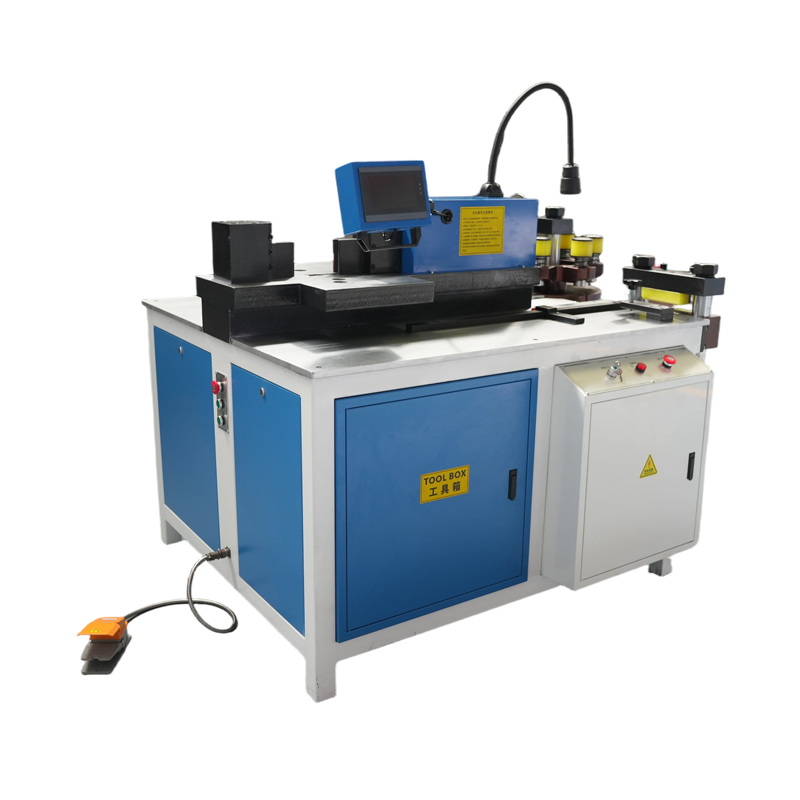
In the production of distribution boxes and high- and low-voltage electrical equipment, the copper busbar processing machine is an important core piece of equipment that can perform copper busbar cutting, punching, bending, and chamfering. The machine’s processing accuracy, operational stability, and production capacity directly affect distribution cabinet assembly quality, electrical safety, and order delivery efficiency.
Many electrical equipment manufacturers and engineering managers tend to focus only on price and overlook equipment parameters when purchasing a copper busbar processing machine, which can lead to mismatched specifications, insufficient processing accuracy, and increased rework rates. At the same time, a lack of understanding of the parameter differences between different machine models may also result in over- or under-configured equipment, causing production capacity waste and idle capital.
Why Is Your Copper Busbar Processing Machine Not Durable or Increasing Production?
Based on numerous real-world application cases from electrical equipment manufacturers, most issues with copper busbar processing machines are caused by improper machine selection and parameter mismatches: low-cost equipment may have overstated specifications, while the actual cutting thickness and punching pressure fail to meet the stated values, making thick copper busbars prone to deformation and edge chipping during processing; conventional hydraulic models have poor consistency in batch processing accuracy, making manual calibration time-consuming and labor-intensive; blindly purchasing CNC models may prevent small-order production from fully utilizing the machine’s advantages, resulting in extremely low equipment utilization.
In addition, unclear specifications, downgraded configurations, and the lack of standardized parameter-based acceptance criteria are also key reasons for oil leakage, declining accuracy, frequent failures, and disputes over after-sales service. Therefore, professional selection of a copper busbar processing machine must be based on actual parameters benchmarked against production capacity, operating conditions, and processing standards.
Detailed Parameter Comparison of Mainstream Copper Busbar Processing Machine Models
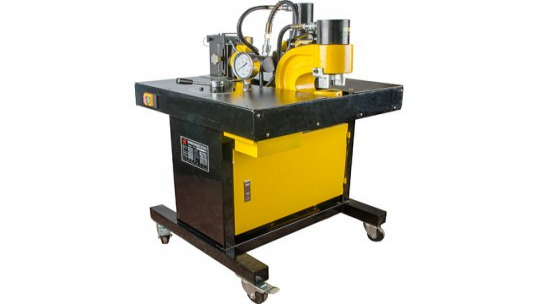
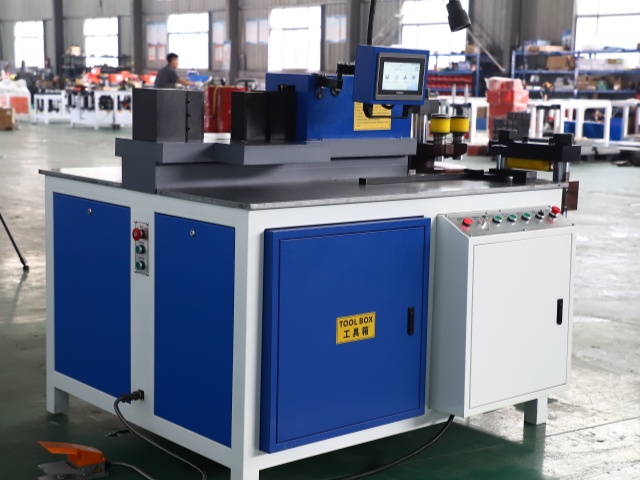
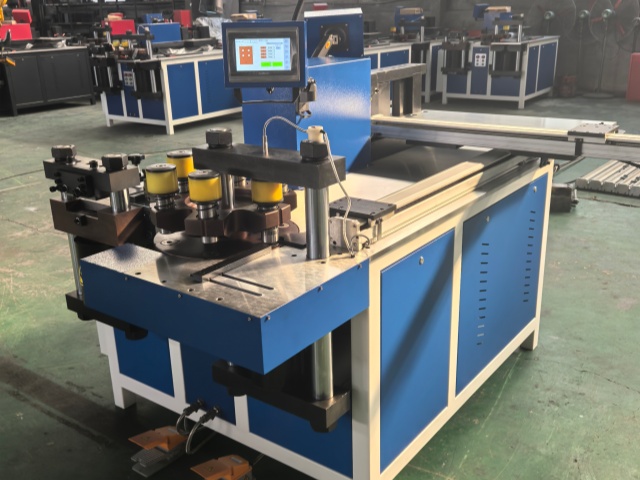
The mainstream copper busbar processing machines on the market are divided into three main types: portable hydraulic models, standard three-station models, and fully automatic CNC models.
Comparison items | Portable Busbar Processing Machine (Economy Model) | Three-in-one busbar processing machine (standard model) | CNC Numerical Control Copper Busbar Processing Machine (High-End Mass Production Model) |
Maximum shearing specification | Thickness ≤12mm, width ≤160mm | Thickness ≤16mm, width ≤260mm | Thickness ≤20mm, width ≤300mm |
Maximum shear force | 300KN | 400KN | 500KN |
Punching processing range | Aperture diameter 4.3–34mm, manual positioning | Aperture diameter 4.3–34mm, with scale-assisted positioning | Aperture diameter 4.3–34mm, CNC automatic positioning |
Bending accuracy error | ±1.0°(Manually calibrated) | ±0.5°(Semi-automatic compensation) | ±0.3°(fully automatic recoil compensation) |
Repeat positioning accuracy | ±0.8mm | ±0.5mm | ±0.1mm |
Control system | Basic hydraulic manual control, simple PLC | Upgrade the PLC control system, with parameter storage capability. | Intelligent CNC system, supporting CAD |
Single-station power | 4KW | 5.5KW | 5.5KWServo motor |
Homework mode | Single-station alternating operation, process queueing | Three-position independent synchronized operation | Automated linked-operation mass production |
Core advantages | High cost-performance, simple to operate, and low maintenance costs | Balanced efficiency, stable precision, suitable for conventional mass production | Zero human error, strong consistency, and significant labor savings |
Parameter-Based Precision Selection
You can directly match the copper busbar processing machine model to your specific processing requirements, eliminating blind selection.
1.Small Distribution Box Processing Factories (Low Monthly Production Capacity, Mixed Orders)
For daily processing of copper busbars with a thickness of ≤12 mm and a width of ≤160 mm, without large-volume standardized orders, a portable hydraulic copper busbar processing machine is the preferred choice. The machine parameters are fully suitable for conventional low-voltage cabinet processing requirements. With low investment costs, easy operation without prior experience, and simple maintenance, it is the cost-effective first choice for small factories as a busbar processing machine.
2.For copper busbars with a thickness of 12–16 mm, a three-in-one busbar processing machine is recommended to balance processing precision and production capacity. The three workstations can operate simultaneously without interruption, while bending and positioning accuracy are significantly better than those of economical models. It can reliably meet the requirements of high- and low-voltage distribution cabinet mass production, increasing production capacity by more than 40%.
3.Large-Scale Mass Production / Export Switchgear Manufacturers (High Standards, Strict Acceptance)
For processing thick copper busbars, copper busbars for high-voltage cabinets, or export switchgear equipment, where extremely high requirements are placed on precision consistency and finished product appearance, a CNC busbar processing machine must be selected. With a bending accuracy of ±0.3° and a positioning accuracy of ±0.1 mm, it supports one-click drawing import, completely solving errors caused by manual processing, and the finished products fully comply with high-end engineering acceptance standards.
In-Depth Verification of Core Configurations: Avoid Hidden Risks of Reduced-Quality Components Despite Meeting Specifications
Some copper busbar processing machines meet the stated specifications, but use downgraded core components, which can lead to accuracy degradation, oil leakage, and premature mold wear during long-term use. When purchasing, in addition to checking the specifications, it is essential to verify the core configurations to ensure the long-term stability of the machine.
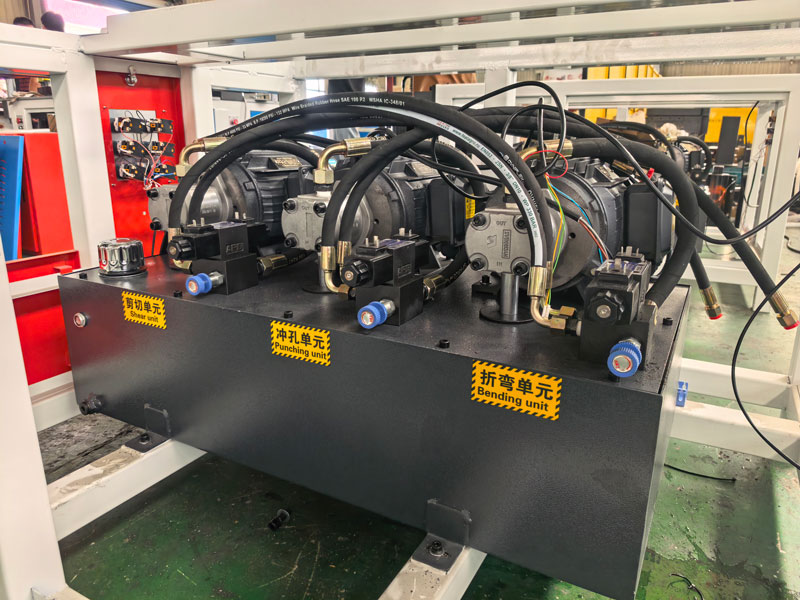
1.Hydraulic System:As the power core of the copper busbar processing machine, it should be equipped with branded hydraulic pumps, valve groups, and hydraulic cylinders to ensure stable output of the specified shearing force and punching pressure, without pressure loss or oil leakage during long-term high-frequency operation.
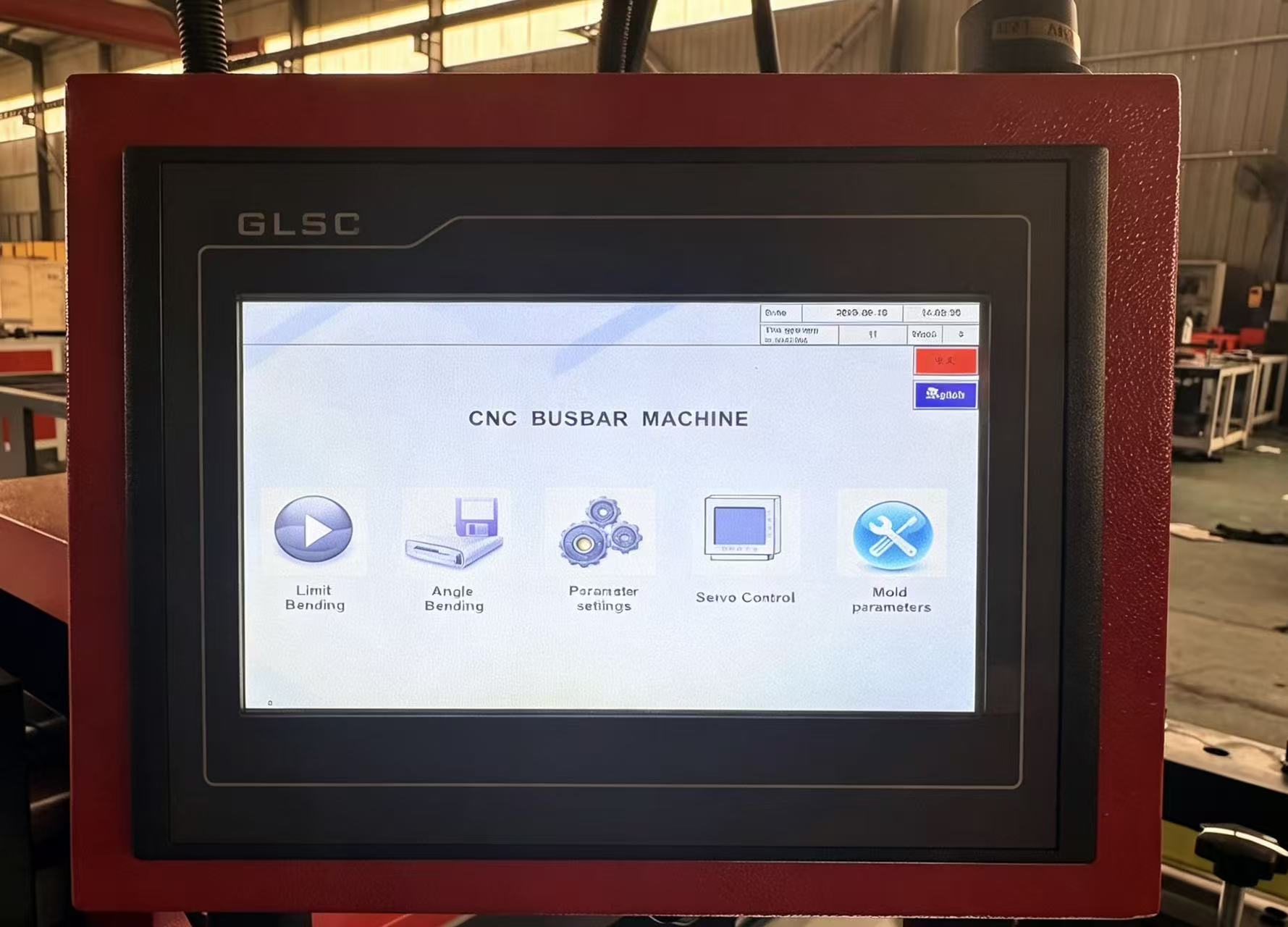
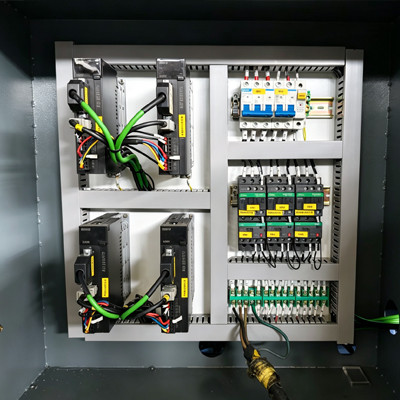
2.CNC and Electrical System:CNC copper busbar processing machines should be equipped with industrial-grade PLCs and servo drives, supporting parameter storage and automatic springback compensation to prevent program lag and data loss; for standard hydraulic models, branded electrical components are preferred to reduce the probability of circuit failures.
3.Mold Material:The mold material directly determines the quality of the finished products. High-quality alloy molds are wear-resistant and resistant to chipping, ensuring stable punching and bending accuracy over the long term, avoiding hole position deviation and bending deformation caused by mold wear. No frequent replacement of components is required, reducing maintenance costs.
4.Machine body and frame: An integrated welded frame made of thickened steel plates, with sufficient rigidity to prevent deformation during heavy-duty machining, maintaining the machine’s rated accuracy stably over long-term use and avoiding significant accuracy degradation after six months of operation.
Safety design and practical operation adaptability, tailored to workshop production needs
A reliable copper busbar processing machine not only meets the required specifications but is also well suited to high-frequency workshop operations. The equipment comes standard with an emergency stop, safety guard, overload protection, and limit protection to reduce the risk of workplace injuries caused by manual operation; the control interface is simple and intuitive, while CNC models support one-touch program retrieval and batch processing, lowering the operating threshold for workers. Before purchasing, you can plan the workshop placement area and lifting access in advance based on the equipment dimensions and specifications, ensuring compatibility with the production line layout.
Confirm after-sales service to ensure the equipment remains stable and reliable over the long term.
The copper busbar processing machine is industrial equipment intended for long-term use, and after-sales service and technical support directly affect the subsequent use and maintenance of the equipment. Before purchasing, you should focus on confirming the following points
1.1.Installation and Training: Confirm whether the manufacturer provides equipment installation guidance, operator training, and a complete operating manual, so that operators can quickly master how to use the equipment.
2.Technical documentation and remote support: Confirm whether the manufacturer provides electrical drawings and remote technical support to facilitate equipment commissioning, routine maintenance, and troubleshooting.
3.Warranty and spare parts supply: Find out in advance the equipment warranty period and whether commonly used spare parts can be supplied over the long term, to avoid production disruptions caused by a shortage of parts after prolonged equipment use.
4.Molds and troubleshooting: Confirm whether the molds can be purchased separately, and understand the process for handling equipment failures and the after-sales response procedures.
For overseas customers, special attention should also be paid to remote technical support, spare parts supply, and after-sales response capabilities. Choosing a copper busbar machine manufacturer that can provide ongoing technical support can better ensure the long-term stable operation of the equipment.
Assess the manufacturer's capabilities, rather than looking only at specifications and price.
When purchasing a copper busbar processing machine, you should not focus only on equipment specifications and quotations, but also make a comprehensive assessment based on the manufacturer's capabilities and service capacity:
1.Independent R&D and production capabilities: Determine whether the manufacturer has independent R&D, machining, and complete-machine assembly capabilities, avoiding reliance solely on external procurement and assembly.
2.Equipment testing and processing capabilities: Confirm whether the manufacturer can provide equipment testing videos and, where conditions permit, conduct a trial run using the customer's actual copper busbar material and processing drawings.
3.Actual processing and export experience: Find out whether the manufacturer has actual processing cases and whether they have overseas export experience, which is especially important for overseas customers.
4.Technical support and spare parts supply: Confirm whether the manufacturer can provide long-term technical support and whether commonly used spare parts can be continuously supplied to ensure stable operation of the equipment in the later stages.
5.requirements for copper busbar specifications, processing techniques, or molds, confirm in advance whether the manufacturer supports equipment and mold customization.
By comprehensively evaluating the above aspects, you can more fully assess the production capabilities and service level of copper busbar machine manufacturers.
FAQ
Q1: How can you quickly determine whether the specifications of a copper busbar processing machine are falsely advertised?
A:You can test the processing results of the largest specified copper busbar size on site: thick copper busbars should be sheared without deformation or large-area edge chipping, and the bending angle error should fall within the machine’s stated range. At the same time, verify the equipment motor power and hydraulic pressure parameters to rule out machines with falsely advertised specifications.
Q2: Compared with hydraulic models, what are the parameter advantages of CNC copper busbar processing machines?
A:CNC models can achieve bending accuracy of ±0.3° and positioning accuracy of ±0.1mm, support automatic springback compensation and batch program storage, completely eliminating errors from manual operation, with batch processing consistency far exceeding that of ordinary hydraulic copper busbar processing machines.
Q3: How can the parameters of a copper busbar processing machine be precisely matched to different operating conditions?
A:For small specifications and small batches, choose a 12mm/160mm three-in-one model; for medium specifications and stable mass production, choose a 16mm/250mm three-station model; for large specifications and high-precision mass production, choose a 20mm/300mm CNC model, strictly matching parameters to actual needs without waste.
Q4: What should I do if the precision of a copper busbar processing machine declines after prolonged use?
A:First, contact the manufacturer for parameter calibration, die inspection, and hydraulic system maintenance. Regularly replacing wear parts can maintain the equipment’s factory precision standards over the long term and prevent precision degradation from affecting finished product quality.

Related Articles
No content available.