
CNC Busbar Processing Machines: Differences Between Servo-Driven and Hydraulically-Driven Systems, and a Selection Guide
During copper and aluminum busbar processing, the drive system of a CNC busbar processing machine directly affects the machine’s processing efficiency, positioning accuracy, operating method, and applicable applications. Currently, busbar processing machines on the market mainly use two types of drive systems: hydraulic drive and servo drive.
For manufacturers of distribution cabinets, switchgear, power equipment, and new energy electrical equipment, understanding the differences between servo drive and hydraulic drive can help them choose the right equipment based on busbar specifications, production volume, and automation requirements.
What Is a Hydraulic-Driven Busbar Processing Machine?
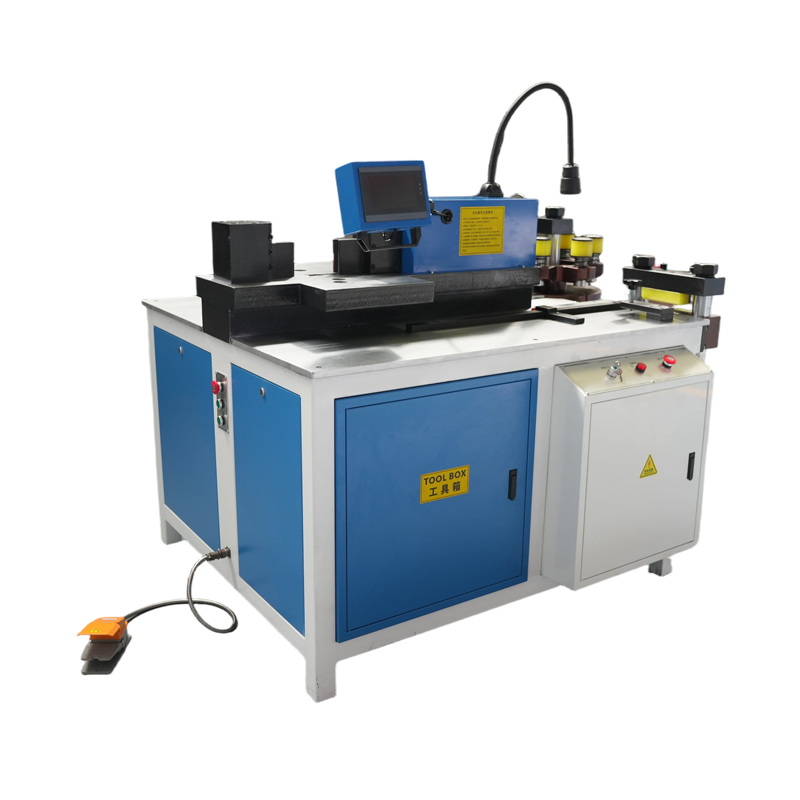
Hydraulic drive is a commonly used drive method for 3-in-1 busbar processing machines. The machine generates stable processing pressure through a hydraulic pump, hydraulic valves, and hydraulic cylinders, providing power for the three workstations—punching, shearing, and bending—to meet the conventional processing needs of copper and aluminum busbars.
In terms of dimensional control, hydraulic busbar processing machines typically use mechanical scales or positioning structures. Operators measure, mark, and position the copper busbar according to the required processing dimensions, and then complete processing operations such as punching, shearing, and bending.
Core Differences Between Servo Drive and Hydraulic Drive
Although both types of machines can be used for copper and aluminum busbar processing, their working methods differ significantly.
| Comparison Items | Hydraulic drive | Servo drive |
| Drive method | Hydraulic cylinder | Servo motor |
| Positioning Method | Manual measurement, mechanical positioning | Automatic Servo Positioning |
| Operating Instructions | Manual entry and adjustment | Digital operation via touchscreen |
| Positioning efficiency | Dependent on operators | Automatic Positioning |
| Processing consistency | Depends on the level of skill | Higher consistency in batch processing |
| Programming Requirements | Generally lower | Supports parametric operations |
| Equipment cost | relatively low | Relatively high |
| Energy conservation | generally | Energy savings of 40%–60% |
| Applicable Scenarios | Standard and small-batch processing | Batch, high-precision machining |
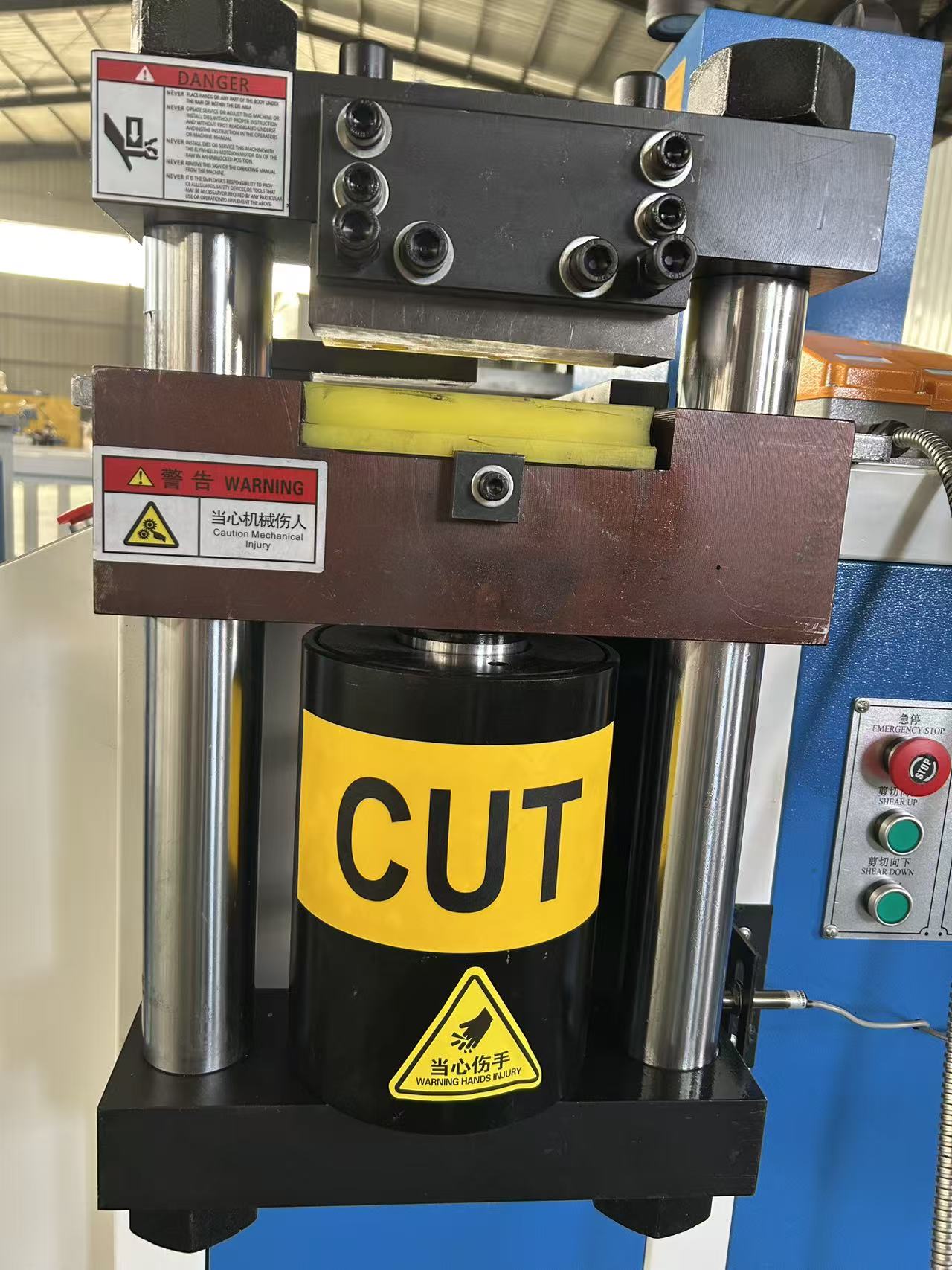
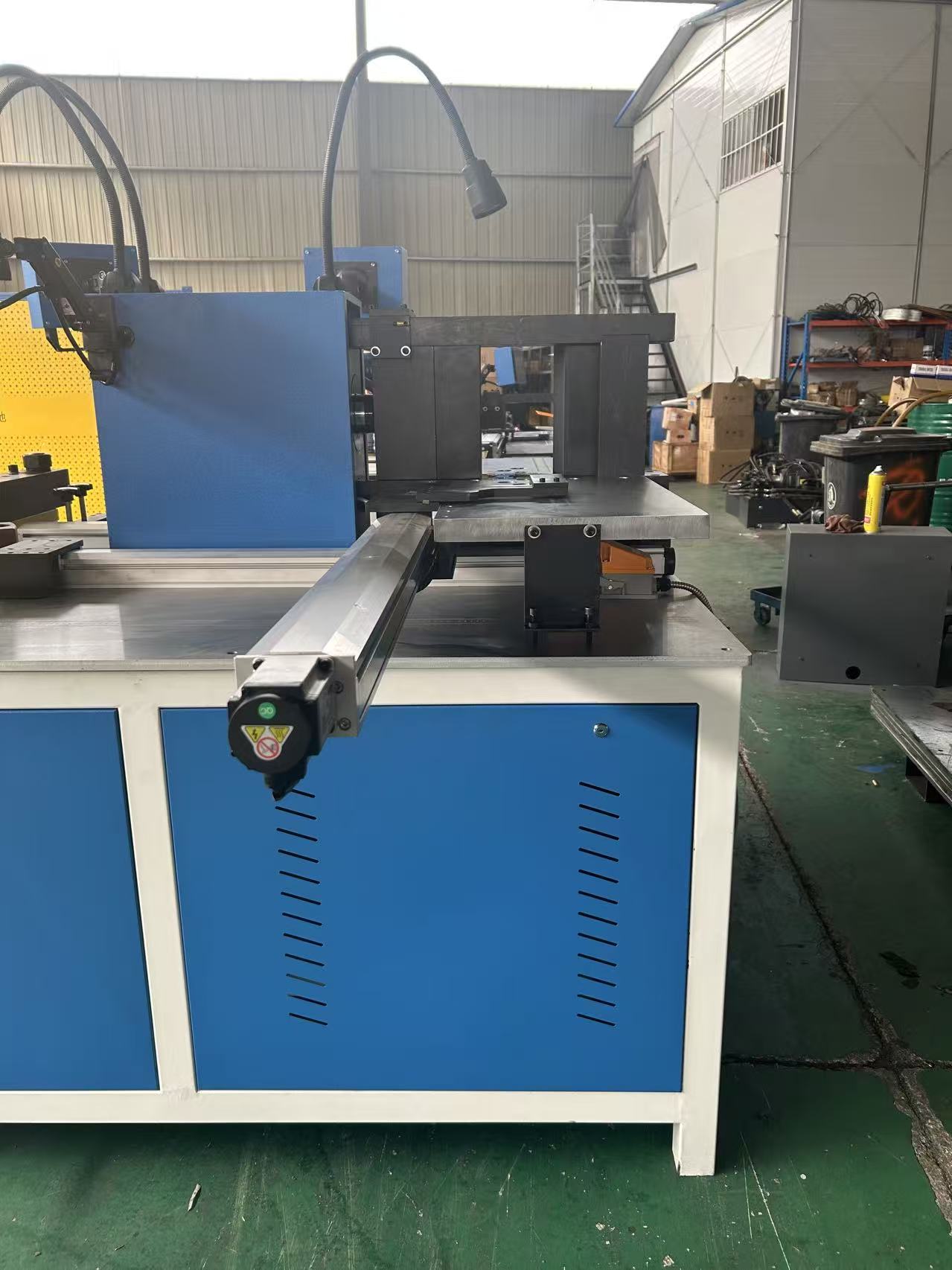
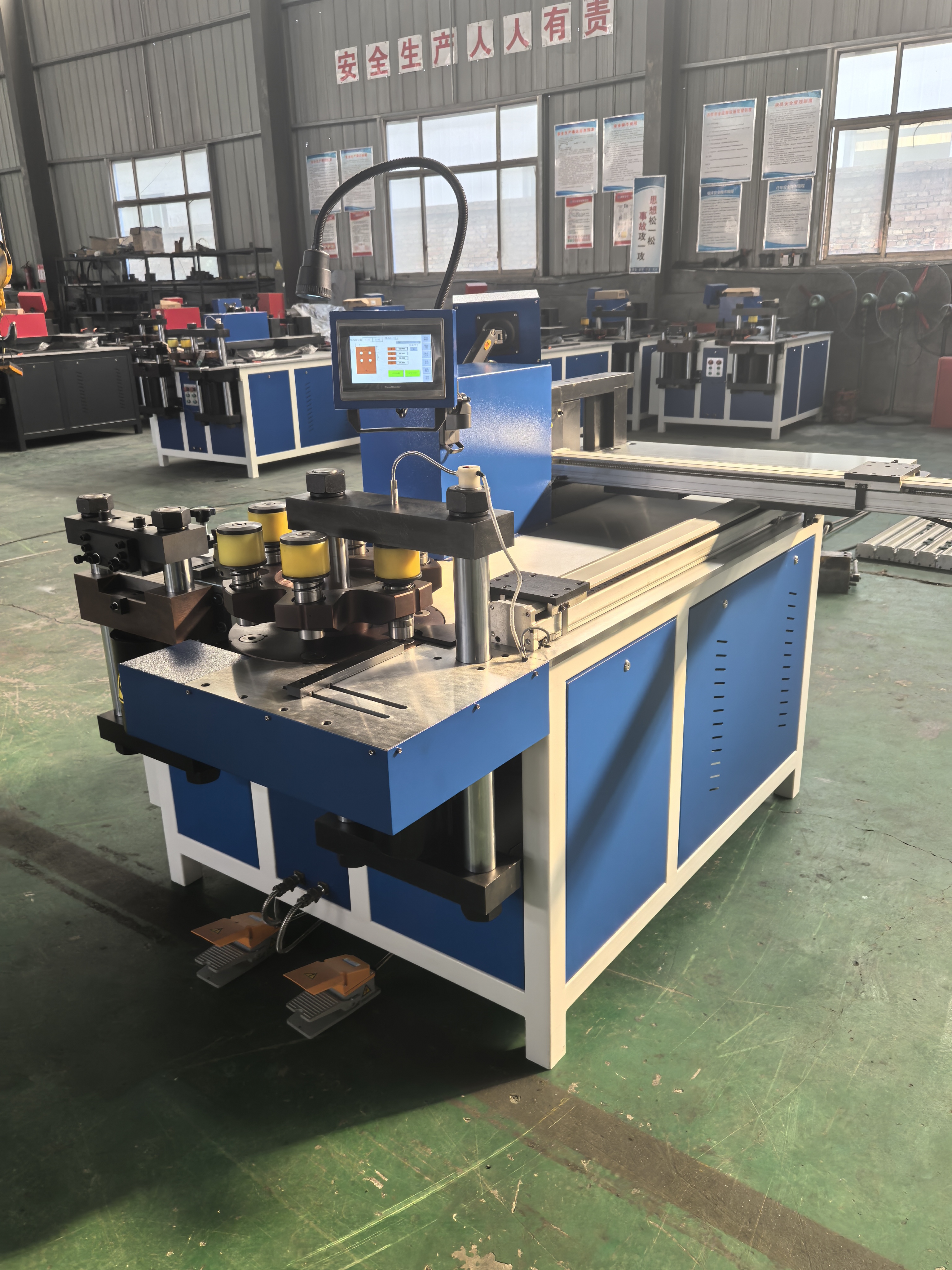
In actual CNC busbar processing machines, the drive system can also adopt a combination of “hydraulic processing power + servo automatic positioning.” Some Fenghua servo busbar processing machines use this structure: the hydraulic system is responsible for high-load processing such as punching and shearing, while the servo system is responsible for automatic control of processing dimensions and positioning.
This design combines the processing force of the hydraulic system with the positioning capability of the servo system, making it more suitable for batch production scenarios that require high processing efficiency, consistent positioning accuracy, and a higher level of automation.
Why Can Servo and Hydraulic Systems Be Used Together?
In actual CNC busbar processing machines, different drive systems can be combined according to the machine structure.
For example, a busbar processing machine can use a hydraulic system to provide high processing force, while using a servo motor, ball screw, and encoder for automatic positioning.
This combination allows both systems to take advantage of their respective strengths: the hydraulic system provides the processing power, while the servo system is responsible for automatic positioning. The hydraulic system can meet the high-load processing requirements of punching, shearing, and other operations, while the servo system controls the positioning and repeat processing dimensions.
Fenghua CNC can provide different busbar processing machine configurations according to customers’ actual production needs. For customers who require stable processing pressure while also looking to improve positioning consistency and production efficiency, a machine configuration combining hydraulic processing power with servo automatic positioning can be considered. This configuration is particularly suitable for batch production scenarios such as switchgear, distribution cabinets, and new energy electrical equipment.
What Is the Difference in Processing Accuracy?
For busbar processing, positioning accuracy not only affects the processing results of individual copper busbars, but also affects subsequent switchgear assembly.
Hydraulic-driven machines typically require operators to position the busbar according to a graduated scale. If errors occur during measuring, marking, or placing the busbar, they may result in deviations in hole spacing, cutting length, or bending position.
Servo-driven machines control the positioning through a servo motor and ball screw mechanism, combined with encoder feedback, to achieve more stable automatic positioning.
When continuously processing copper busbars of the same specifications, a servo busbar processing machine can automatically call the preset parameters, reducing repeated manual measurements and improving the consistency of workpieces in the same batch.
Therefore, servo positioning has clear advantages for distribution cabinet and switchgear manufacturers that require a large amount of repetitive processing.
What Is the Difference in Production Efficiency?
Production efficiency is an important factor for companies to consider when choosing a CNC busbar processing machine.
When using a traditional hydraulic busbar processing machine, operators may need to re-measure the length, hole spacing, and bending position each time they process a copper busbar. For production tasks with small order quantities, this method can meet basic production needs.
However, when dozens or even hundreds of copper busbars need to be processed every day, repeated measurements can take up a significant amount of labor time.
Servo equipment can preset the processing dimensions and complete repetitive processing through automatic positioning. For example:
Enter dimensions → Automatic positioning → Place the copper busbar → Process → Next piece
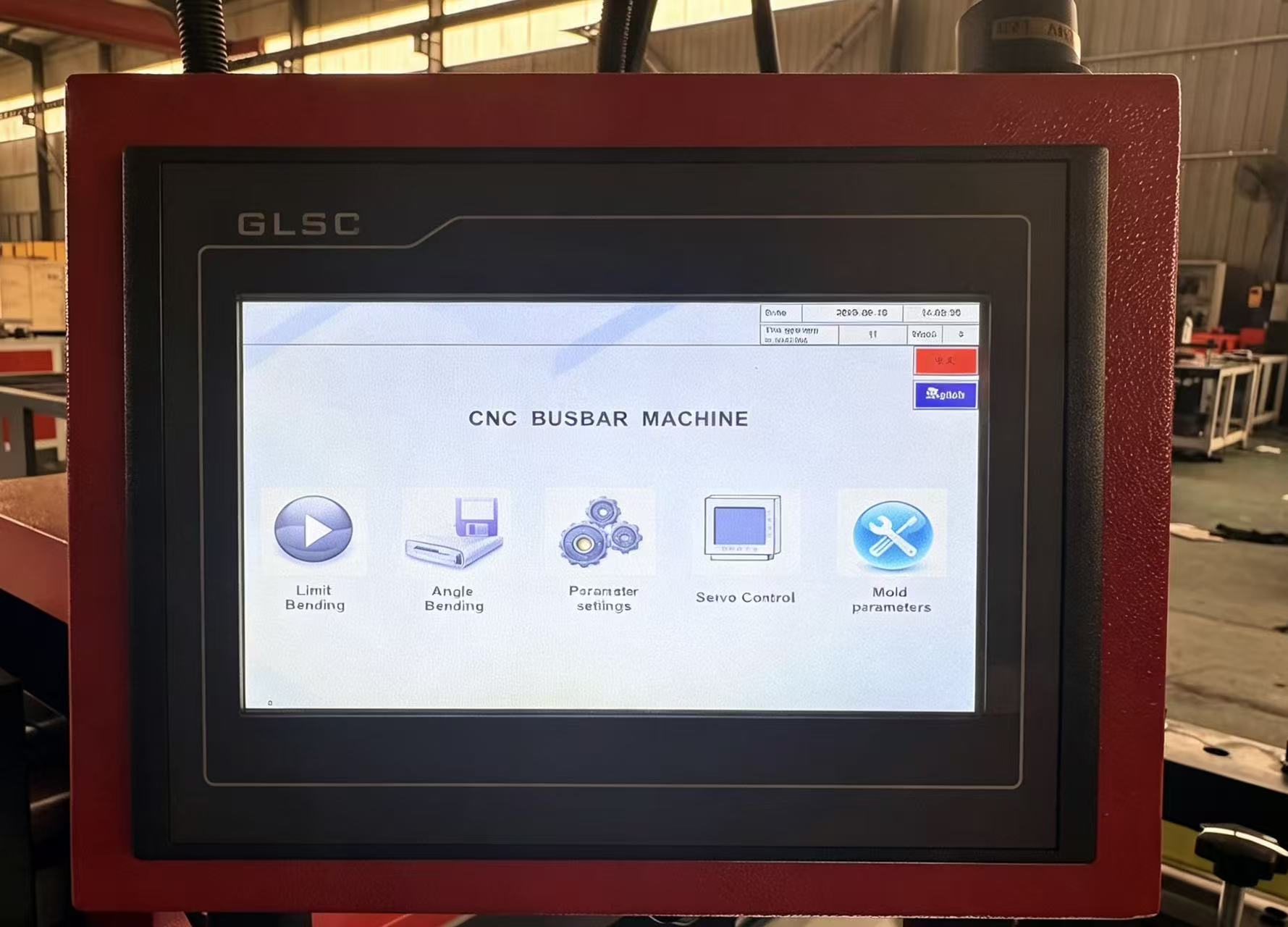
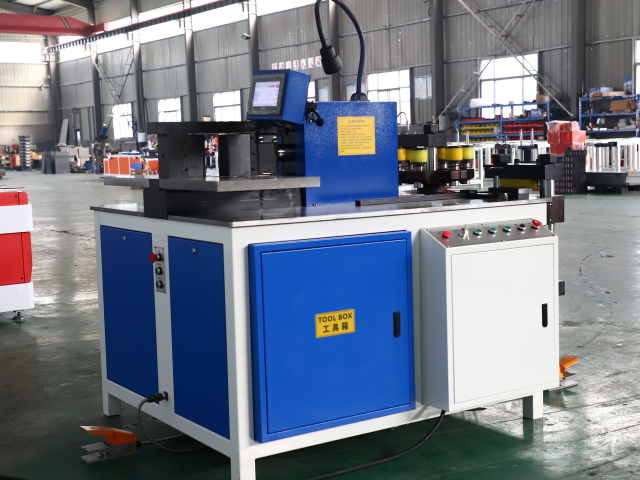
Some Fenghua fully automatic servo busbar processing machines have been upgraded for automated batch production. Three CNC control screens separately manage the punching, cutting, and bending stations, and the machines use ball screw transmission and a servo positioning system. Some models are equipped with a Siemens PLC control system, which can perform positioning and processing control according to the preset parameters.
For manufacturers that need to continuously process large quantities of copper busbars with the same or similar specifications, this configuration can reduce manual measurement and repeated positioning operations, improving the standardization of the production process.
What Are the Differences in Operation?
One of the advantages of hydraulic equipment is its simple operation.
For conventional 3-in-1 busbar processing machines, operators usually complete processing through a mechanical scale, positioning stopper, and foot switch, without the need for complex program settings.
Servo equipment is more digitalized.
Operators can enter the following parameters through the touchscreen:
• Copper busbar length
• Punching position
• Hole spacing
• Bending position
• Bending angle
• Processing quantity
The machine performs automatic positioning and processing according to the preset parameters.
Therefore, if a company wants to reduce manual measurement and improve the standardization of its production process, servo-driven equipment is usually more suitable.
Is Servo Drive Always Better Than Hydraulic Drive?
Not necessarily.
When choosing a CNC busbar processing machine, companies should not simply assume that servo equipment is always better than hydraulic equipment. Instead, the choice should be based on actual production requirements.
When Is Hydraulic Drive a Suitable Choice?
If a company has the following characteristics, it can consider a hydraulic busbar processing machine as a priority:
• Small copper busbar processing volume
• Large variations in product specifications
• Mainly processing conventional copper busbars
• Low demand for automatic positioning
• Limited budget
• More experienced operators
Hydraulic equipment has a mature structure, stable processing pressure, and relatively lower equipment investment.
When Is Servo Drive a Suitable Choice?
If a company has the following requirements, servo equipment is more suitable:
• Batch processing of copper busbars
• High daily processing volume
• Higher requirements for consistency in hole spacing and bending positions
• Wanting to reduce manual measurement
• Wanting to improve production efficiency
• Wanting to achieve digital processing
• Needing to save and repeatedly call up processing parameters
Especially for manufacturers that produce switchgear, distribution cabinets, and new energy electrical equipment in batches, servo positioning can effectively reduce repetitive operations.
How to Choose the Right CNC Busbar Processing Machine?
When choosing equipment, it is recommended not to compare only the two keywords “servo” and “hydraulic.” Instead, the following parameters should be considered comprehensively:
1. Maximum Copper Busbar Processing Size
First, confirm the width and thickness of the copper or aluminum busbars that need to be processed.
For example, common models such as 303, 503, and 803 have different processing capabilities. The dimensions listed in the machine specifications usually need to be checked separately for the punching, cutting, and bending stations, rather than simply assuming that “200 × 12 mm” means all three stations have exactly the same processing capacity.
Fenghua provides different specifications of busbar processing machines, including 303, 503, and 803 models, and supports hydraulic, servo, and CNC configurations. Different models are mainly designed for processing copper and aluminum busbars with different width and thickness ranges.
2. Daily Processing Volume
If only a small number of copper busbars need to be processed each day, a hydraulic busbar processing machine can meet basic production requirements.
If a large number of identical workpieces need to be processed daily, the automatic positioning and parameter recall functions of a CNC busbar processing machine should be key considerations.
3. Positioning Accuracy
For products such as high-voltage and low-voltage switchgear and power distribution cabinets, hole spacing and bending positions directly affect subsequent assembly.
If high dimensional consistency is required, a machine equipped with a servo positioning system is recommended.
4. Processing Requirements
Confirm whether the machine can perform all three operations: punching, shearing, and bending.
For special busbar processing requirements, in addition to standard punching, shearing, and bending functions, the die configuration should also be carefully checked.
Fenghua supports the customization of special dies according to customers' processing requirements, including long holes, special R angles, irregular-shaped holes, twisted busbars, terminal crimping, arc bending, and other non-standard bending dies.
Before purchasing a busbar processing machine, customers are advised to provide actual processing drawings or die dimension requirements so that technical engineers can confirm the machine's stroke, processing capacity, and die solution.
5. Level of Automation
Different companies have different automation requirements.
The main advantages of hydraulic-driven CNC busbar processing machines are their high processing force and relatively low initial equipment investment. For factories with irregular order volumes that mainly process thick copper busbars, hydraulic drive provides stable processing pressure while controlling equipment purchasing costs, making it a cost-effective choice.
How to Choose Between a Servo Busbar Processing Machine and a Hydraulic Busbar Processing Machine?
Simply put:
Hydraulic drive = Stable processing power + Easy operation + Cost-effectiveness.
Servo drive = Automatic positioning + Digital operation + Higher efficiency for batch processing.
If your main requirement is conventional copper busbar processing and your production volume is relatively low, a standard hydraulic 3-in-1 busbar processing machine may be a suitable choice.
If you have a high volume of production orders, frequently process copper busbars of the same dimensions, and want to reduce manual measuring and improve processing consistency, a CNC busbar processing machine or a servo-positioning busbar processing machine may be a more suitable choice.
As a busbar processing machine manufacturer, Fenghua has independent R&D and manufacturing capabilities. We manage the entire production process, from mechanical structure design, hydraulic systems, and CNC control systems to complete machine assembly and testing. Each machine undergoes professional testing and strict inspection before shipment to ensure reliable processing performance and product quality.
Fenghua offers a wide range of busbar processing machines, including hydraulic 3-in-1 busbar processing machines, servo-positioning busbar processing machines, CNC busbar punching and shearing machines, and busbar bending machines. We offer different models and specifications, including 303, 503, and 803, and provide customized machines and dies based on customers' copper busbar dimensions, production volume, and special processing requirements.
If you are choosing a hydraulic busbar processing machine or a servo CNC busbar processing machine, you can send your copper busbar width, thickness, daily production volume, and processing requirements to the Fenghua technical team. We will recommend a suitable machine model and configuration based on your actual production needs.

Related Articles
No content available.